

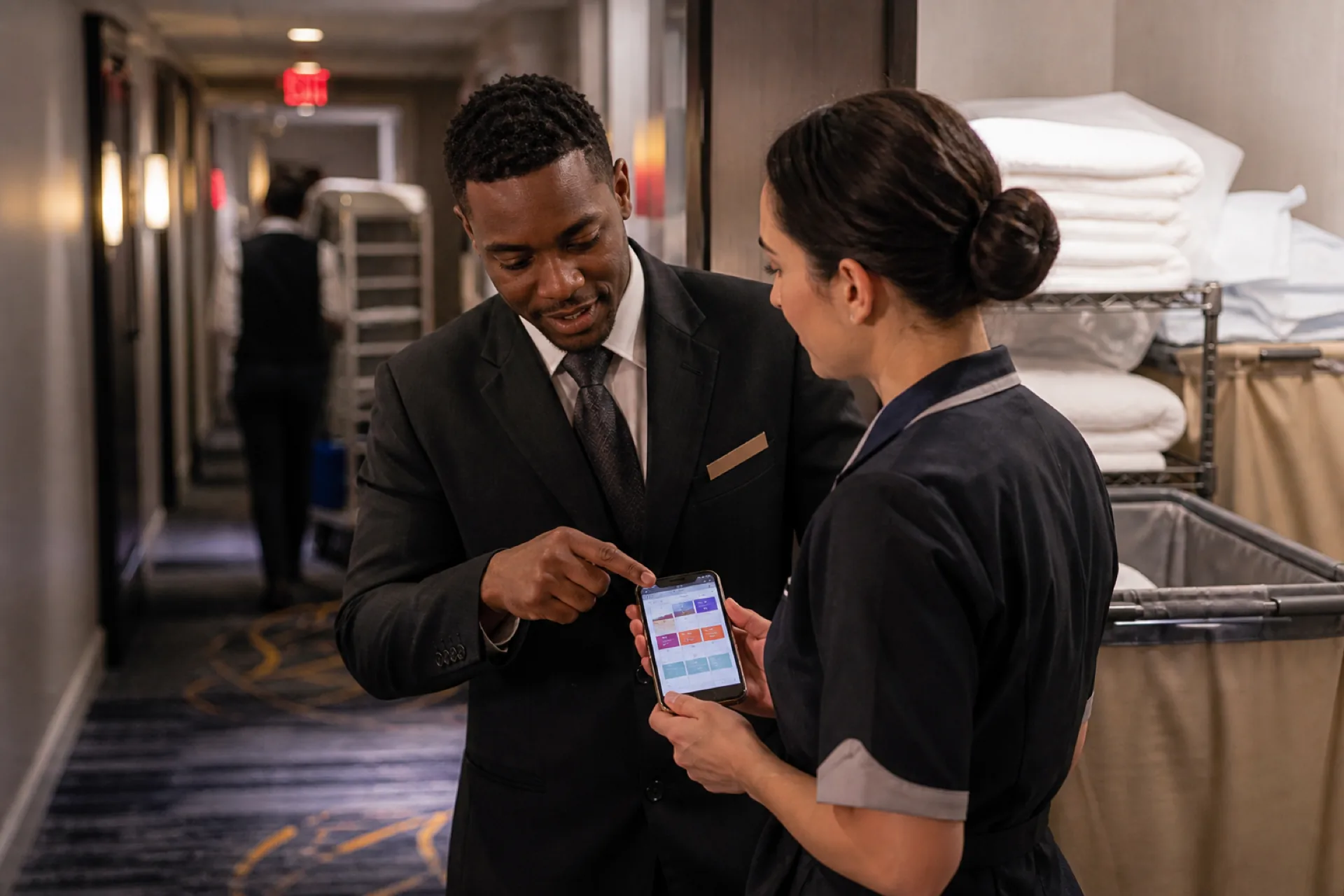
Hotel Staff Scheduling Software for New York City Hotels (2026)
How hotel staff scheduling software helps New York City hotels simplify shift planning, coordinate departments, reduce labor costs, and manage 24/7 hospitality teams.
Hotel staff scheduling software for New York City hotels (2026)
A Midtown boutique hotel opens Friday short one housekeeper because the swap lived in a group chat, not on the published roster. A Brooklyn extended-stay property publishes three versions of the same week across front office and rooms managers. A Manhattan luxury hotel learns about a front desk no-show when the guest queue is already at the door.
If you search hotel staff scheduling software New York City, you need more than a shared spreadsheet. You need department-aware shift blocks, mobile visibility for hourly staff, swap approvals, open shift fill, leave beside the grid, and labor hour visibility in a market where staffing gaps hit guest experience fast.
This guide explains what hotel scheduling software NYC operators should evaluate in 2026: hotel scheduling challenges, common problems, essential features, benefits, how Heyshift helps, how to choose software, FAQ, and links into the broader NYC workforce cluster.
Featured answer: What is the best hotel staff scheduling software for NYC hotels? The best fit combines drag-and-drop shift building across front desk, housekeeping, maintenance, F&B, and support roles, publish-first roster discipline, mobile schedules for hourly staff, manager-approved swap requests, attendance tied to shifts, multi-property roll-up, and overtime visibility before payroll closes.
Who should read this: General managers, front office managers, rooms division leaders, and operations directors at hotels, boutique properties, luxury hotels, extended-stay locations, hostels, serviced apartments, and hospitality management companies in New York City comparing hotel employee scheduling software before demos.
Executive summary
Hotel staff scheduling software New York City teams trust in 2026 publishes one official week across departments, fills call-offs through open shifts on mobile, and keeps attendance beside the roster finance exports.
In this guide you will find:
- Hotel scheduling challenges in NYC
- Common problems from understaffed shifts to multi-department drift
- Features every hotel should prioritize
- Benefits for guest service, labor cost, and staff satisfaction
- How Heyshift helps NYC hotel teams
- Choosing the right solution and FAQ
Table of contents
- Hotel scheduling challenges
- Common scheduling problems
- Features every hotel needs
- Benefits of hotel scheduling software
- Why Heyshift works for hotels
- Choosing the right hotel scheduling software
- How hotel scheduling fits the NYC cluster
- Frequently asked questions
- Final thoughts
Hotel scheduling challenges
New York City hotels run 24/7 with sharp occupancy swings, expensive labor, and hourly teams spread across departments. Scheduling is not a back-office task you finish once a week. It is a guest service operation tied to every arrival, turn-down, and banquet load-in.
| NYC hotel reality | Scheduling implication |
|---|---|
| 24/7 operations | Overnight front desk, night audit, and security blocks |
| Seasonal occupancy changes | Templates must flex for conventions, holidays, tourism |
| Staff shortages | Open shifts must fill fast without manager phone trees |
| Multiple departments | Front desk, housekeeping, F&B, events need one publish standard |
| Last-minute schedule changes | Swaps and call-offs cannot live only in chat |
| Labor cost management | Overtime and overstaffing hit margin weekly |
Department coordination and guest touchpoints
Hotels schedule across front desk, housekeeping, maintenance, concierge, valet, security, F&B, and banquet teams. A grid that lists names without departments hides coverage gaps until guests feel them at check-in or room delivery.
Scheduling software for hotels should let managers build department-aware blocks and publish one roster hourly staff open on mobile.
Occupancy swings and NYC demand
NYC hotels see sharp demand curves: weekday corporate travel, weekend leisure spikes, holiday compression, and event weeks when banquet and front office peaks overlap. Templates for high-occupancy and shoulder weeks save rebuild time.
The American Hotel & Lodging Association (AHLA) publishes industry workforce trends useful for benchmarking hospitality labor practices. The U.S. Bureau of Labor Statistics shows competitive hiring pressure for lodging and food service roles in the New York metro.
Labor cost and New York context
Hotel labor is a major controllable expense. When hour totals hide until payroll, managers overstaff quiet weekday mornings and underbuild sold-out Saturday arrivals in the same month.
New York wage and hour rules differ from many states. Scheduling software supports hour visibility and record keeping; confirm specific requirements with HR advisors and the New York State Department of Labor. The U.S. Small Business Administration offers general resources for growing hospitality employers.
Property types and scheduling priorities
| Property type | Scheduling priority | Software focus |
|---|---|---|
| Boutique and luxury | High-touch FOH ratios | Role clarity, publish discipline |
| Full-service urban | Multi-department peaks | Department templates, roll-up |
| Extended-stay | Longer shifts, smaller teams | OT visibility, mobile roster |
| Hostels and select-service | Lean staffing | Open shifts, swap approvals |
| Multi-property groups | Consistent publish rules | Multi-site reporting |
For restaurant-specific NYC scheduling in the same market, read restaurant scheduling software for NYC restaurants.
Rooms division and housekeeping peaks
Room readiness drives guest satisfaction as much as front desk coverage. Hotel employee scheduling software should support housekeeping route or floor templates, turn-down windows, and overlap with maintenance without separate spreadsheet merges. When housekeeping and front office publish from different files, room-ready promises at check-in break first.
Banquet, events, and F&B overlap
Event weeks stack banquet servers, setup labor, and front office peaks on the same dates. Save event-week templates and tie open shifts to qualified staff pools so call-offs do not scramble both the ballroom and the front desk on the same Saturday.
Department scheduling at a glance
| Department | Typical scheduling focus |
|---|---|
| Front desk | Check-in and check-out peaks, night audit |
| Housekeeping | Room turnover, floor routes, turn-down |
| Maintenance | Response windows, preventive task overlap |
| F&B | Breakfast rush, outlet service, banquets |
| Concierge and valet | Arrival peaks, event nights |
| Security | Overnight and event coverage |
Software should let each department lead build blocks while leadership publishes one official week property-wide.
Common scheduling problems
Most NYC hotels hit the same wall when headcount, departments, and property count grow together.
| Problem | What breaks |
|---|---|
| Understaffed shifts | Queues at check-in, delayed room readiness |
| Overtime expenses | Premium hours stack before anyone sees totals |
| Manual schedule updates | Spreadsheet versions multiply every week |
| Poor communication | Texts contradict the published week |
| Shift conflicts | Same associate double-booked across departments |
| Multi-department coordination | Front office and housekeeping run separate grids |
Understaffed peaks and slow-period bloat
Without hour-level planning, hotels run thin during arrival rushes and heavy during lulls. Hotel shift scheduling software should show hour totals while you assign blocks.
Call-outs and weak publish discipline
Hourly staff stop opening schedules they do not trust. Publish-first discipline means one official week beats screenshots in group chat. Read open shift and swap approvals on the published roster.
Overtime and labor surprises
Overtime is a scheduling problem before it is a payroll problem. See prevent overtime before payroll and time tracking software for NYC small businesses.
Multi-property drift
A second property in another borough breaks spreadsheet habits fast. Hospitality workforce management at scale needs consistent publish rules and roll-up reporting. Explore multi-location scheduling software.
Features every hotel needs
Score platforms on how your property actually runs the week, not on generic calendar features alone.
| Feature | Why NYC hotels need it |
|---|---|
| Drag-and-drop scheduling | Build department blocks quickly |
| Department-based scheduling | Front desk, HK, F&B visible in one workflow |
| Mobile schedules | Hourly staff live on phone between shifts |
| Shift swaps | Approved changes stay on the official roster |
| Attendance tracking | Planned vs worked before payroll close |
| Time tracking | Worked hours tied to published shifts |
| Leave management | PTO visible while building coverage |
| Multi-property scheduling | Borough and portfolio expansion |
Drag-and-drop and occupancy templates
Managers should copy last week's high-occupancy template, adjust for group arrivals and events, and publish once.
Mobile schedules and swap workflows
Front desk agents, housekeepers, and attendants clock life on mobile. If your hotel scheduling software NYC choice assumes managers-only desktop access, hourly adoption fails.
Availability and leave beside the grid
Approved PTO should appear while managers build department coverage. Explore leave management and attendance management software for NYC.
Attendance beside publish
Punches disconnected from the roster force admin staff to reconcile fiction every pay period. Attendance tracking tied to shifts keeps planned and worked aligned.
For the full NYC workforce stack, read workforce management software for NYC small businesses.
Multi-property and reporting
Growing groups add properties across Manhattan, Brooklyn, Queens, and neighboring markets. Workforce visibility supports roll-up reporting and exception review.
Benefits of hotel scheduling software
Reliable hotel staff scheduling software New York City operators adopt pays back in guest service, labor cost, manager time, communication, accuracy, and staff satisfaction.
Improve guest service through better staffing
Right coverage during check-in rushes, turn-down windows, and banquet load-ins reduces wait times and service gaps guests remember.
Reduce labor costs
Visible hour totals while assigning shifts surface overtime risk before publish. Right-sizing quiet periods protects margin in a premium market.
Save management time
Copy-week workflows, department templates, and mobile self-service for swaps cut rebuild cycles for front office and rooms leaders.
Improve communication between departments
Shift reminders and publish notifications keep teams aligned without parallel chat threads that contradict the roster.
Reduce scheduling mistakes
One published week eliminates version conflicts. Departments see the same plan before guests arrive.
Increase employee satisfaction
Predictable schedules and fair swap rules reduce churn when associates juggle transit and second jobs across boroughs.
Night audit and overnight coverage
NYC hotels never close. Night audit, overnight front desk, and security blocks need the same publish discipline as day shifts. Hour totals across midnight boundaries should be visible while scheduling so premium hours do not surprise finance after a convention week.
Why Heyshift works for hotels
Heyshift fits growing NYC hotels that need scheduling, attendance, leave, swaps, and multi-property visibility without enterprise rollout timelines.
| Capability | Hotel fit |
|---|---|
| Employee scheduling | Publish-first department grids |
| Attendance tracking | Mobile clock-in beside published shifts |
| Time tracking | Worked hours and variance before payroll export |
| Leave management | PTO visible while building coverage |
| Multi-location support | Property roll-up for hospitality groups |
| Mobile access | Hourly staff open roster on phone |
| Workforce reporting | OT trends, fill rate, exception review |
Built for hourly hospitality teams
Heyshift targets boutique properties, select-service hotels, extended-stay locations, and multi-property groups roughly 10 to 500 hourly employees. A 30-day free trial lets you pilot one property with real departments and shift templates.
Review pricing for seat and location bands.
Choosing the right hotel scheduling software
Use this framework in demos and trials. Score your worst sold-out Saturday, not your quietest weekday.
Ease of use
- Can a front office manager build and publish a department week in under an hour?
- Do housekeepers and front desk agents open shifts on mobile without training sessions?
- Is department coverage clearer than your current spreadsheet?
Mobile accessibility
- Do staff receive shift reminders and roster updates on phone?
- Can they request swaps and claim open shifts in app?
Scalability for growing hotel groups
- Can you add properties without new spreadsheet habits per site?
- Do permissions support GM, department head, and regional ops roles?
- Will reporting roll up when you expand beyond one property?
Reporting features
- Can you see hour totals and overtime risk while scheduling?
- Does finance export clean hours tied to shift blocks?
- Can you compare planned vs worked by property and department?
Customer support and pricing
- Is support responsive during your publish window?
- Read employee scheduling software pricing guide.
Demo questions for NYC hotel buyers
- Walk me through building a sold-out weekend across front desk and housekeeping, then publishing to mobile.
- Show a housekeeper swap request from phone to manager approval.
- How do open shift notifications reach qualified staff?
- Where do I see hour totals and overtime risk while scheduling?
- What does multi-property reporting look like at three NYC hotels?
Red flags during evaluation
- Departments require separate exports to merge
- Swaps and open shifts happen only in chat
- Hour totals hidden until payroll export
- No mobile roster for hourly staff
- Leave requests do not appear when building coverage
Pilot plan for NYC hotels
| Week | Focus |
|---|---|
| Week 1 | Import staff and departments; build one arrival-day template |
| Week 2 | Publish first full week; staff open mobile roster |
| Week 3 | Route swaps and open shifts through approvals only |
| Week 4 | Compare planned vs worked; tune OT alerts before payroll |
Document publish day and department minimums (for example, two front desk agents during 3 p.m. to 7 p.m. check-in peak). Consistency matters more than perfect templates on day one.
How hotel scheduling fits the NYC cluster
Heyshift is building a New York City commercial hub around distinct buying keywords. Hotel operators often search industry terms before general workforce phrases.
| NYC guide | When hotel managers should read it |
|---|---|
| Employee scheduling software NYC | Vendor comparison across industries |
| Workforce management software NYC | Full stack: schedule, attendance, leave, reporting |
| Shift scheduling software NYC | Swaps, open shifts (all industries) |
| Attendance management software NYC | Punches, planned vs worked |
| Time tracking software NYC | Hours, payroll export |
| Restaurant scheduling software NYC | F&B and restaurant concepts |
| Retail employee scheduling software NYC | Stores |
| Healthcare staff scheduling software NYC | Clinics |
| Hotel staff scheduling software NYC | 24/7 departments, guest service (this guide) |
Start here if you run a hotel or serviced apartment in the city. For broader hospitality publish habits, read NYC hospitality shift scheduling.
Final thoughts
Hotel staff scheduling software New York City operators choose in 2026 should publish one official week across departments, fill call-offs through open shifts on mobile, and keep attendance beside the roster finance exports.
NYC occupancy pressure, labor cost, and 24/7 operations reward properties that move off spreadsheets into publish-first hotel scheduling software NYC teams will actually open on mobile before guests arrive.
In New York City hotels, scheduling software wins when the published roster is the only week your departments trust before the first guest checks in, not the spreadsheet your front office manager emailed on Sunday night.
National hospitality buyers should also read best scheduling software for hospitality businesses alongside this NYC-specific guide. For city-by-city roster app context, see roster app software for USA hospitality by city.
Frequently Asked Questions
Continue with related topics
More articles on topics related to this one.
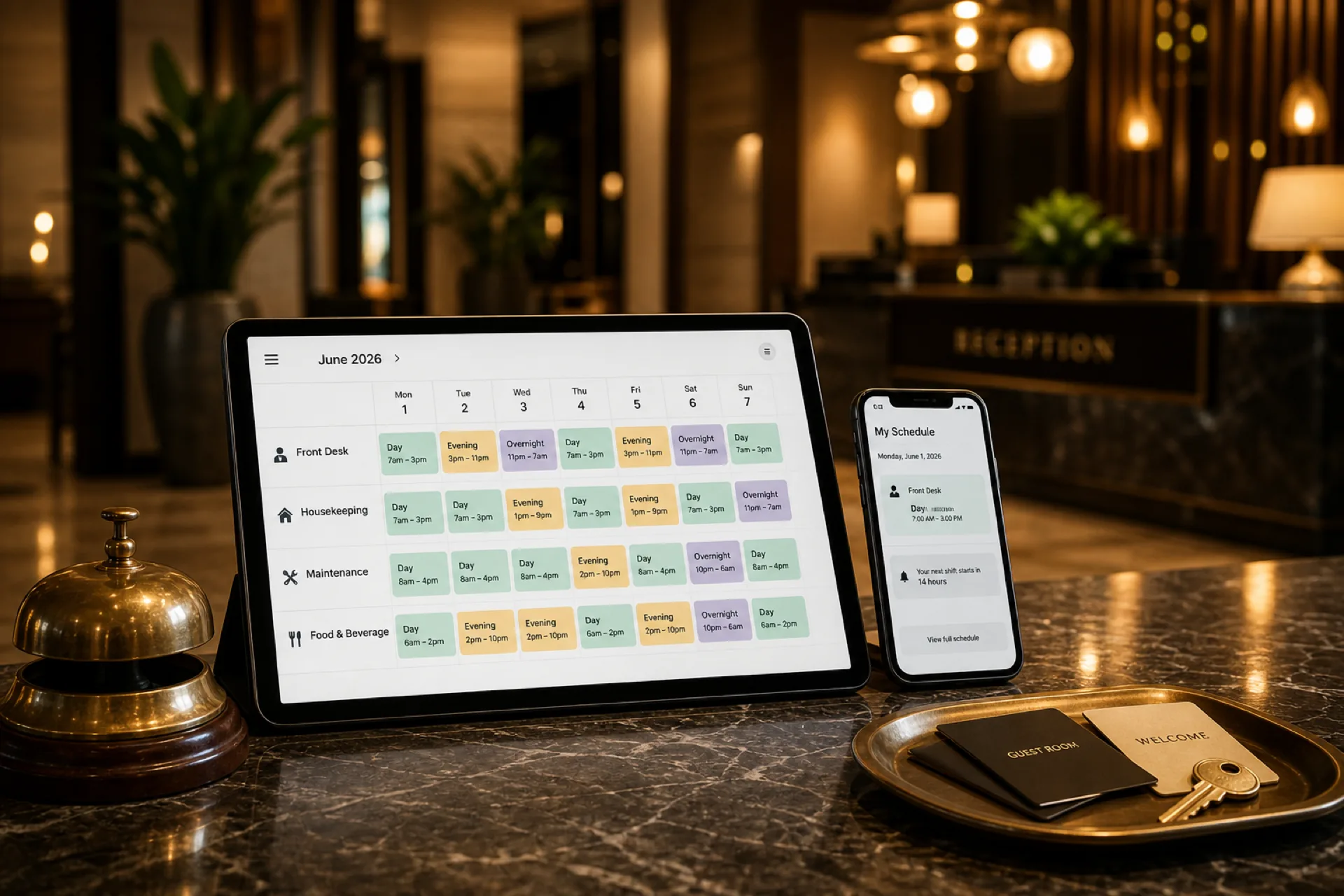
Best scheduling software for hospitality businesses (2026 guide)
Compare the best scheduling software for hospitality businesses in 2026: hotel and resort shift scheduling, attendance tracking, multi-property management, and workforce communication for guest-ready teams.
Read article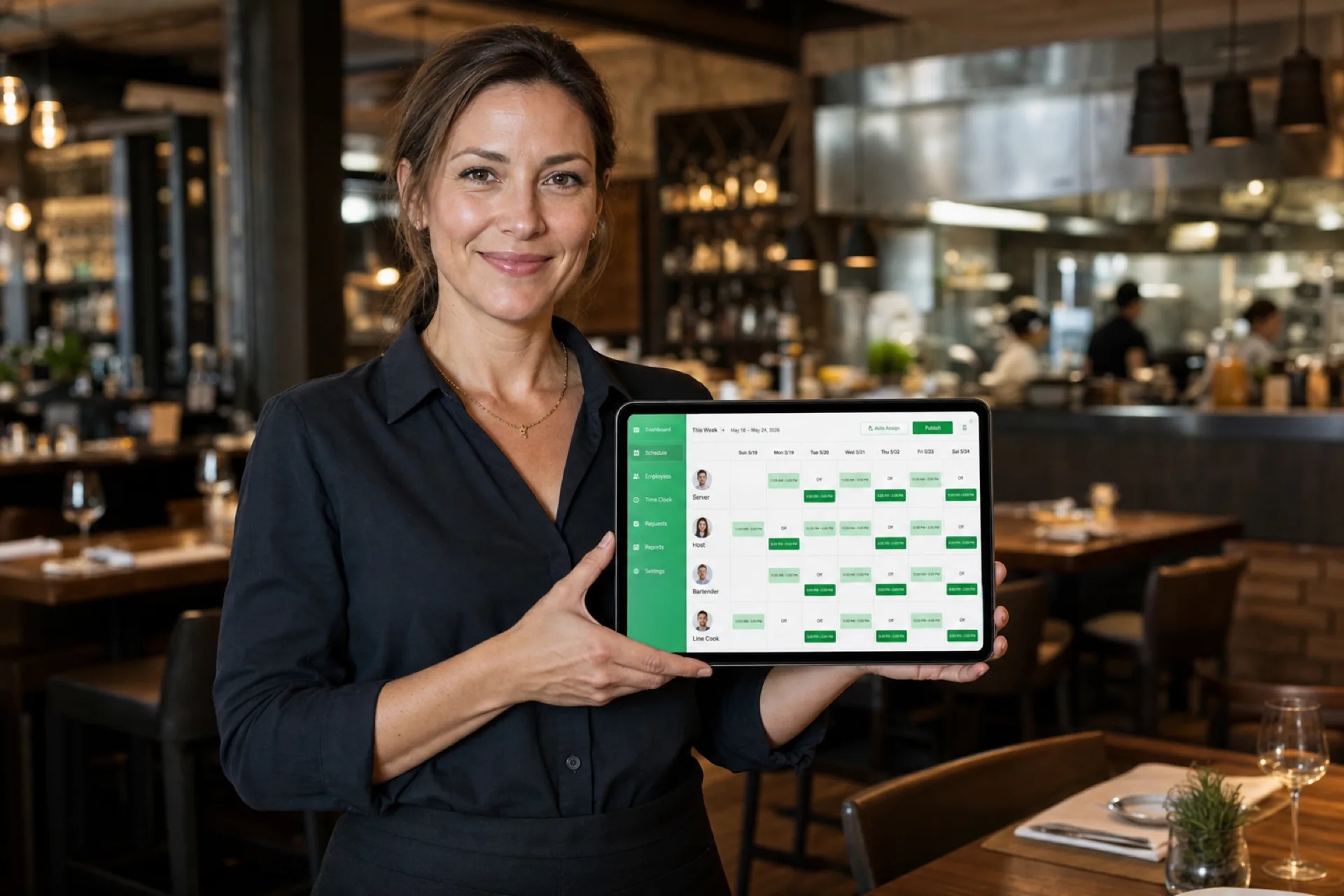
Best employee scheduling software for restaurants (2026)
Compare the best restaurant employee scheduling software in 2026: FOH and kitchen coverage, shift swaps, labor visibility, and multi-location support for USA operators.
Read article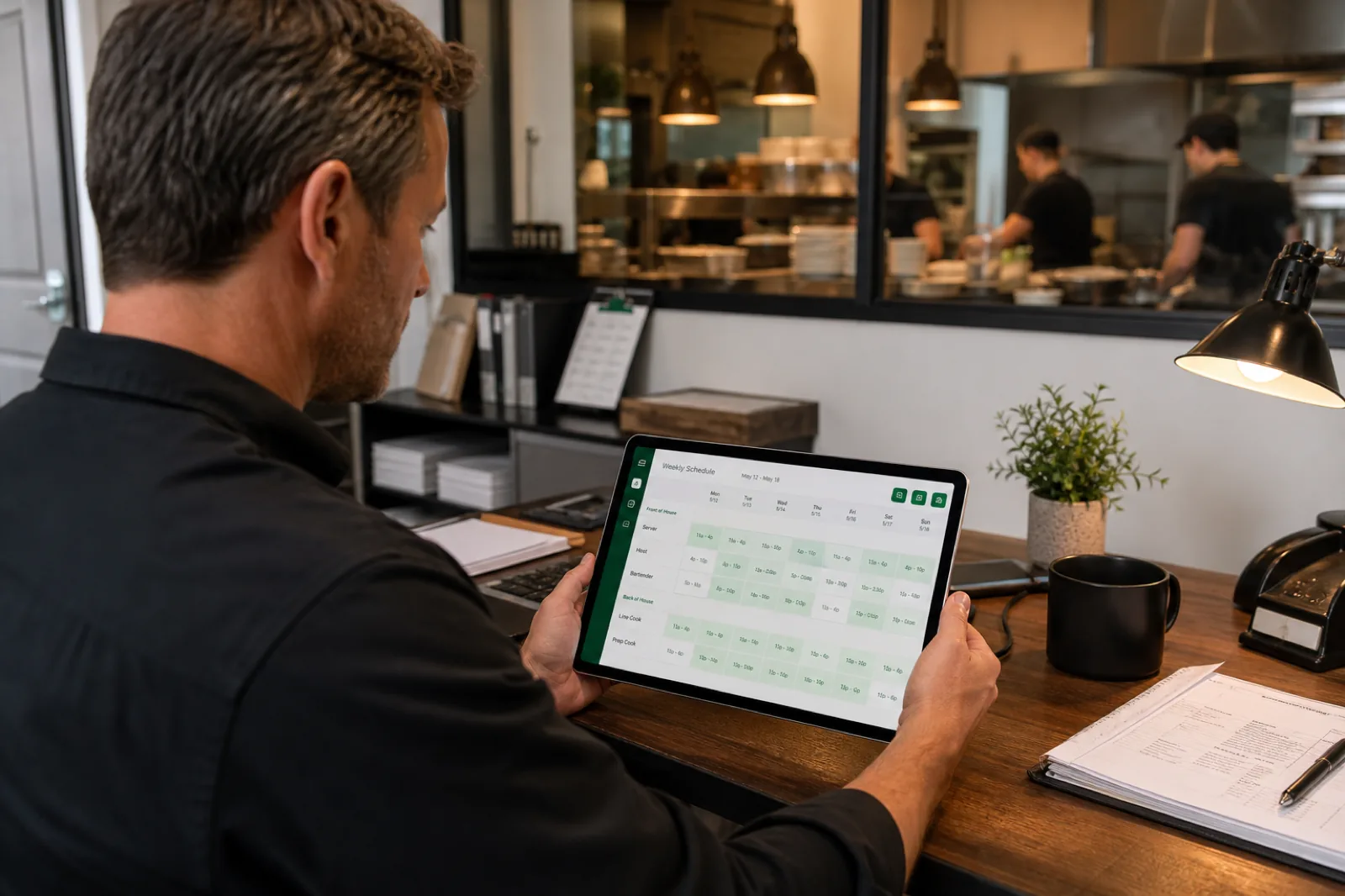
Restaurant staff scheduling: the complete guide for restaurant managers
Restaurant staff scheduling best practices help managers match FOH and BOH coverage to demand, control labor cost, handle call-offs, and keep hourly teams on one published roster.
Read article