

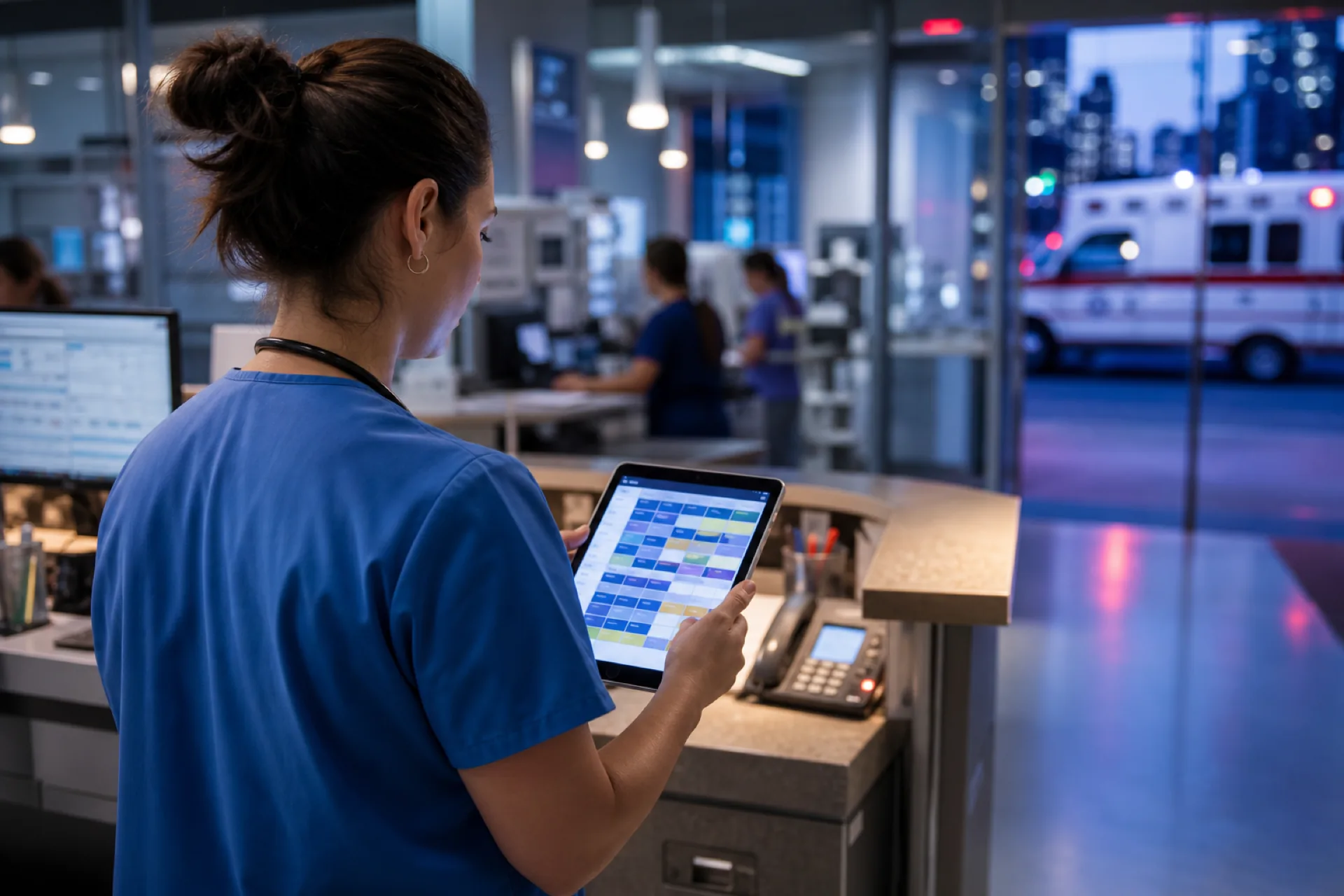
Healthcare Staff Scheduling Software for New York City Healthcare Providers (2026)
How healthcare staff scheduling software helps New York City clinics, urgent care centers, and healthcare providers optimize shift planning, reduce overtime, and manage clinical teams.
Healthcare staff scheduling software for New York City healthcare providers (2026)
A Midtown urgent care center opens Monday short one medical assistant because the swap lived in a group chat, not on the published roster. A Brooklyn dental practice publishes three versions of the same week across two office managers. A Queens physical therapy clinic learns about a therapist no-show when patients are already checked in.
If you search healthcare staff scheduling software New York City, you need more than a shared spreadsheet. You need credential-aware shift blocks, mobile visibility for clinical and front-desk staff, swap approvals, open shift fill, leave beside the grid, and labor hour visibility in a market where staffing gaps hit patient experience fast.
This guide explains what healthcare scheduling software NYC providers should evaluate in 2026: healthcare scheduling challenges, common problems, essential features, benefits, how Heyshift helps, how to choose software, FAQ, and links into the broader NYC workforce cluster.
Featured answer: What is the best healthcare staff scheduling software for NYC providers? The best fit combines drag-and-drop shift building for clinical and support roles, publish-first roster discipline, mobile schedules for hourly staff, manager-approved swap requests, availability and leave beside the grid, attendance tied to shifts, multi-location roll-up, and overtime visibility before payroll closes.
Who should read this: Administrators and managers at medical and dental clinics, urgent care centers, home healthcare agencies, specialty clinics, physical therapy centers, diagnostic labs, veterinary clinics, and multi-location healthcare organizations in New York City comparing medical staff scheduling software before demos.
Executive summary
Healthcare staff scheduling software New York City providers trust in 2026 publishes one official week for clinical and support roles, fills call-offs through open shifts on mobile, and keeps attendance beside the roster finance exports.
In this guide you will find:
- Healthcare scheduling challenges in NYC
- Common problems from double-booking to overtime drift
- Essential features every provider should prioritize
- Benefits for staff utilization, patient care continuity, and admin time
- How Heyshift helps NYC healthcare teams
- Choosing the right solution and FAQ
Table of contents
- Healthcare scheduling challenges
- Common scheduling problems
- Essential features
- Benefits of healthcare scheduling software
- Why Heyshift works for healthcare teams
- Choosing the right solution
- How healthcare scheduling fits the NYC cluster
- Frequently asked questions
- Final thoughts
Healthcare scheduling challenges
New York City healthcare providers run on appointment-linked coverage, credential mix, and hourly teams that often work multiple sites. Scheduling is not a back-office task you finish once a week. It is a patient access operation tied to every session on the books.
| NYC healthcare reality | Scheduling implication |
|---|---|
| 24/7 shift coverage | Urgent care and home health need overnight and weekend blocks |
| Staff shortages | Open shifts must fill fast without phone trees |
| Last-minute call-outs | Coverage gaps hit wait times before payroll |
| Overtime management | Premium hours stack in competitive labor market |
| Compliance requirements | Accurate time records support documentation |
| Patient care continuity | Planned coverage must match session demand |
Session-linked coverage and role mix
Clinics schedule by appointment blocks: physicians, nurse practitioners, medical assistants, nurses, front desk, and lab draw staff must align with session templates. Clinic employee scheduling software should let managers build role-aware blocks and publish one roster clinical staff open on mobile.
Read medical office scheduling best practices and clinic staff scheduling best practices.
Staff shortages and NYC hiring pressure
Federal metro employment data continues to show hiring pressure for healthcare support and clinical roles in the New York metro. When recruiting is hard, schedule accuracy and fair swap rules matter more for retention. For U.S. employment context, see Census employment topics.
The American Hospital Association publishes workforce trends useful for benchmarking staffing challenges across care settings. Ambulatory and clinic operators face similar hourly scheduling pressure at smaller scale.
Compliance and documentation context
Scheduling software supports hour visibility and time records. It does not replace legal, HR, or clinical compliance counsel. Confirm requirements with qualified advisors and New York health resources via NY.gov health services.
Provider types and scheduling priorities
| Provider type | Scheduling priority | Software focus |
|---|---|---|
| Medical and dental clinics | Session templates, MA bands | Role clarity, leave beside grid |
| Urgent care | Extended hours, rapid fill | Open shifts, OT visibility |
| Home healthcare | Route and visit windows | Mobile roster, multi-site |
| Physical therapy | Therapist room coverage | Appointment-linked blocks |
| Diagnostic labs | Draw and processing staff | Peak morning templates |
| Multi-location groups | Consistent publish rules | Multi-site roll-up |
For national vendor comparisons, see best healthcare staff scheduling software.
Home health and field clinical teams
Home healthcare agencies schedule by visit windows and caregiver routes across boroughs. Mobile roster access, open shifts, and multi-site roll-up matter as much as session templates in fixed clinics. Healthcare workforce management for field teams should prioritize publish discipline staff open between visits, not only admin desktop grids.
Read home healthcare scheduling best practices when visits replace appointment blocks as the primary scheduling unit.
Dental, veterinary, and specialty clinics
Dental and veterinary practices share session-linked patterns with medical clinics but often run tighter teams per chair or exam room. One hygienist or vet tech double-booked across operatories creates delays patients feel immediately. Medical staff scheduling software should support chair-aware templates and leave visible beside provider blocks.
Specialty clinics (PT, imaging, labs) add equipment and room constraints. Build templates that reflect room turnover, not only headcount.
Urgent care and extended hours
Urgent care centers run evenings, weekends, and holidays with smaller teams than hospitals but similar call-off pressure. Peak templates for afternoon and evening rushes, plus open shift notifications, help managers fill gaps before waiting rooms back up.
Common scheduling problems
Most NYC healthcare providers hit the same wall when headcount, locations, and session volume grow together.
| Problem | What breaks |
|---|---|
| Manual scheduling | Spreadsheet versions multiply every week |
| Double-booked employees | Same MA on two sites or sessions |
| Shift conflicts | Front desk covered, clinical lane short |
| Unplanned absences | Wait times rise before managers react |
| Excessive overtime | Premium hours stack before anyone sees totals |
| Communication delays | Texts contradict the published week |
Manual scheduling and spreadsheet drift
Many practices start with Excel rotas and group texts until payroll week or patient complaints expose gaps. Read why spreadsheets fail for workforce scheduling.
Double-booking and multi-site drift
Providers who float across Manhattan and Brooklyn locations need one publish workflow. Split files create double-booking when two office managers edit different tabs.
Explore multi-location scheduling software.
Call-outs and weak publish discipline
Clinical staff stop opening schedules they do not trust. Publish-first discipline means one official week beats screenshots in chat. Read open shift and swap approvals on the published roster.
Overtime and labor surprises
Overtime is a scheduling problem before it is a payroll problem. See prevent overtime before payroll and time tracking software for NYC small businesses.
Essential features
Score platforms on clinical workflow fit, not generic calendar features alone.
| Feature | Why NYC healthcare providers need it |
|---|---|
| Drag-and-drop scheduling | Build session and role blocks quickly |
| Employee availability management | Part-time and per-diem schedules change weekly |
| Shift swap requests | Approved changes stay on the official roster |
| Attendance tracking | Planned vs worked before payroll close |
| Time tracking | Worked hours tied to published shifts |
| Leave management | PTO visible while building coverage |
| Mobile scheduling | Clinical staff live on phone between sites |
| Multi-location workforce management | Borough and neighborhood expansion |
Drag-and-drop and session templates
Managers should copy last week's clinic template, adjust for provider PTO and session volume, and publish once. Explore shift scheduling on Heyshift.
Availability, leave, and credential-aware planning
Approved physician or therapist PTO must appear while building MA and front-desk coverage. Explore leave management and healthcare leave management best practices.
Attendance beside publish
Punches disconnected from the roster force admin staff to reconcile fiction every pay period. Attendance tracking tied to shifts keeps planned and worked aligned.
For punches and buddy punching in NYC, read attendance management software for NYC businesses.
Mobile schedules for clinical and support staff
Nurse scheduling software NYC buyers need mobile access for nurses, MAs, front desk, and field staff. Confirm iOS and Android flows and swap requests without help desk tickets.
Read mobile roster and attendance for NYC startups.
Multi-location and reporting
Growing groups add sites across Manhattan, Brooklyn, Queens, and neighboring counties. Workforce visibility supports roll-up reporting and exception review.
For the full NYC workforce stack, read workforce management software for NYC small businesses.
Benefits of healthcare scheduling software
Reliable healthcare staff scheduling software New York City providers adopt pays back in utilization, accuracy, overtime control, admin time, communication, and patient care continuity.
Improve staff utilization
Right roles on the right sessions reduce idle front desk time and clinical lanes running thin during appointment blocks.
Reduce scheduling errors
One published week eliminates version conflicts. Clinical and support staff see the same plan before patients arrive.
Minimize overtime
Visible hour totals while assigning shifts surface overtime risk before publish.
Save administrative time
Copy-week workflows, session templates, and mobile self-service for swaps cut rebuild cycles for office managers.
Improve communication
Shift reminders and publish notifications keep teams aligned without parallel chat threads that contradict the roster.
Support better patient care continuity
Stable coverage reduces wait times, session delays, and last-minute desk confusion patients feel when staffing is wrong.
Credential mix and role clarity
Scheduling software does not replace credential verification systems, but role labels on shift blocks (RN, LPN, MA, front desk, lab) help managers avoid assigning coverage that looks full on paper yet misses required skill mix for the session. Document minimum role counts per template the same way you document minimum register coverage in retail.
Why Heyshift works for healthcare teams
Heyshift fits growing NYC healthcare providers that need scheduling, attendance, leave, swaps, and multi-location visibility without enterprise hospital implementation timelines.
| Capability | Healthcare fit |
|---|---|
| Smart scheduling | Publish-first clinical and support grids |
| Attendance tracking | Mobile clock-in beside published shifts |
| Leave management | PTO visible while building session coverage |
| Time tracking | Worked hours and variance before payroll export |
| Multi-location scheduling | Clinic roll-up for groups expanding across NYC |
| Mobile access | Hourly clinical and support staff on phone |
| Workforce reporting | OT trends, fill rate, exception review |
Built for ambulatory and clinic-scale teams
Heyshift targets medical and dental clinics, urgent care, therapy practices, labs, veterinary clinics, and home healthcare agencies from roughly 10 to 500 employees. Large hospital nurse staffing suites with complex credential engines may need specialized clinical workforce platforms; evaluate fit honestly in trial.
A 30-day free trial lets you pilot one location with real roles and session templates.
Review pricing for seat and location bands.
Choosing the right solution
Use this framework in demos and trials. Score your worst Monday clinic session, not your quietest admin half-day.
Ease of use
- Can an office manager build and publish a clinical week in under an hour?
- Do MAs and front desk staff open shifts on mobile without training sessions?
- Is session coverage clearer than your current spreadsheet?
Scalability
- Can you add locations without new spreadsheet habits per site?
- Do permissions support office manager, clinical lead, and regional ops roles?
- Will reporting roll up when you expand beyond one neighborhood?
Mobile functionality
- Do staff receive shift reminders and roster updates on phone?
- Can they request swaps and claim open shifts in app?
Reporting capabilities
- Can you see hour totals and overtime risk while scheduling?
- Does finance export clean hours tied to shift blocks?
- Can you compare planned vs worked by location and role?
Customer support and pricing
- Is support responsive during your publish window?
- Read employee scheduling software pricing guide.
Demo questions for NYC healthcare buyers
- Walk me through building a session week for providers, MAs, and front desk, then publishing to mobile.
- Show a clinical staff swap request from phone to manager approval.
- How does provider PTO appear when building MA coverage?
- Where do I see hour totals and overtime risk while scheduling?
- What does multi-location reporting look like at three NYC clinics?
Red flags during evaluation
- Clinical and front desk schedules require separate exports to merge
- Swaps and open shifts happen only in chat
- Leave requests do not appear when building session coverage
- Hour totals hidden until payroll export
- No mobile roster for hourly clinical staff
Pilot plan for NYC providers
| Week | Focus |
|---|---|
| Week 1 | Import staff and roles; build one session template |
| Week 2 | Publish first full week; staff open mobile roster |
| Week 3 | Route swaps and open shifts through approvals only |
| Week 4 | Compare planned vs worked; tune OT alerts before payroll |
Document publish day and session minimums (for example, one MA per physician session block). Consistency matters more than perfect templates on day one.
Compare healthcare attendance tracking best practices when planned versus worked variance becomes a weekly office manager review.
How healthcare scheduling fits the NYC cluster
Heyshift is building a New York City commercial hub around distinct buying keywords. Healthcare administrators often search industry terms before general workforce phrases.
| NYC guide | When healthcare managers should read it |
|---|---|
| Employee scheduling software NYC | Startup vendor comparison across industries |
| Workforce management software NYC | Full stack: schedule, attendance, leave, reporting |
| Shift scheduling software NYC | Swaps, open shifts, peak blocks (all industries) |
| Attendance management software NYC | Punches, planned vs worked |
| Time tracking software NYC | Hours, timesheet approval, payroll export |
| Restaurant scheduling software NYC | Hospitality |
| Retail employee scheduling software NYC | Stores and floor teams |
| Healthcare staff scheduling software NYC | Clinics, urgent care, session coverage (this guide) |
| Hotel staff scheduling software NYC | Front office, housekeeping, 24/7 departments |
Start here if you run a clinic or ambulatory practice in the city. For hotels, read hotel staff scheduling software for NYC hotels. For national healthcare depth, read healthcare workforce management guide.
Final thoughts
Healthcare staff scheduling software New York City providers choose in 2026 should publish one official week for clinical and support roles, fill call-offs through open shifts on mobile, and keep attendance beside the roster admin and finance trust.
NYC staffing pressure, session-linked coverage, and multi-site growth reward operators who move off spreadsheets into publish-first healthcare scheduling software NYC teams will actually open on mobile before patients arrive.
In New York City healthcare, scheduling software wins when the published roster is the only week your clinical team trusts before the first patient checks in, not the spreadsheet your office manager emailed on Sunday night.
Related Healthcare Resources
Frequently Asked Questions
Continue with related topics
More articles on topics related to this one.
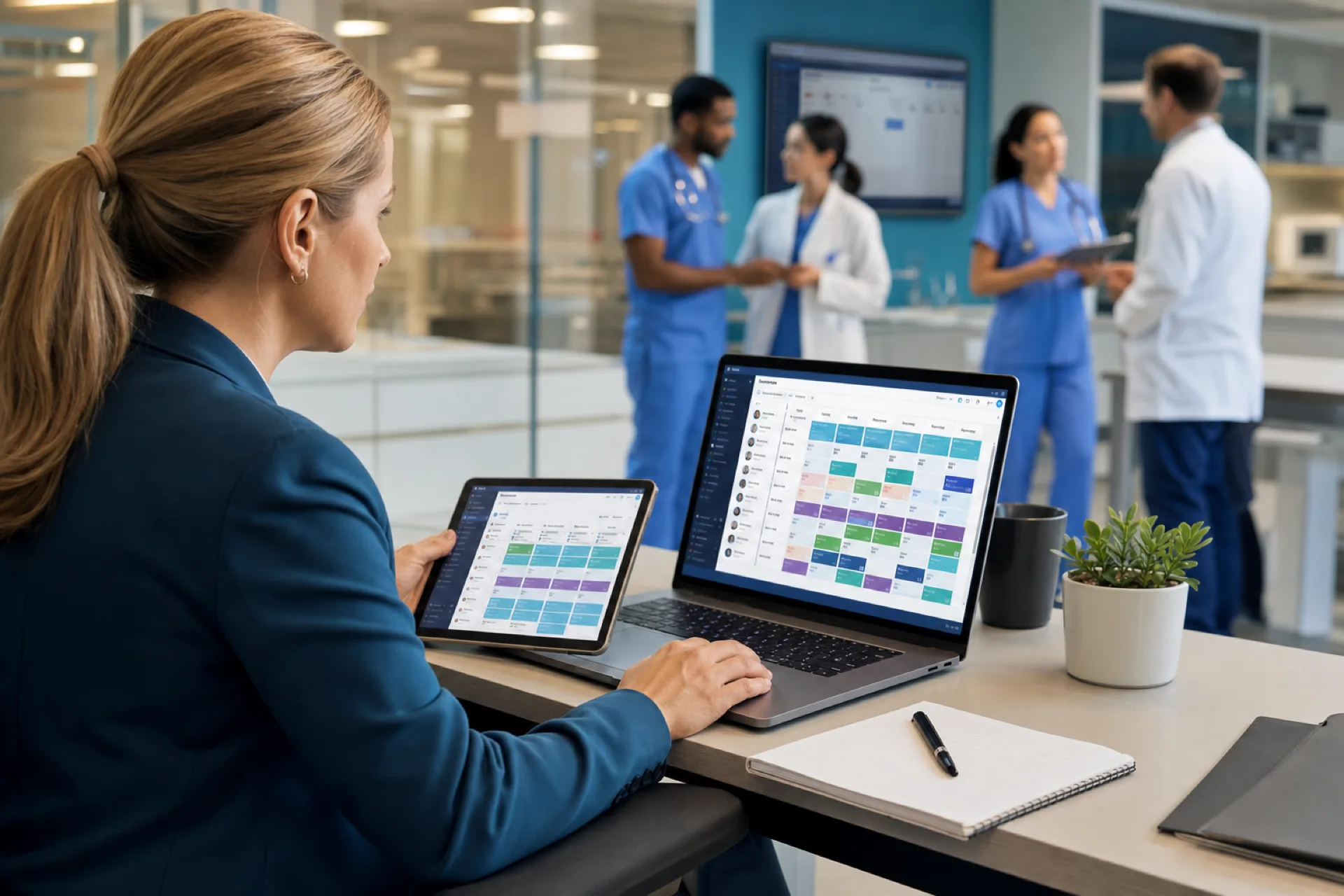
Best Healthcare Staff Scheduling Software (2026): Compare the Top Solutions
Compare the best healthcare staff scheduling software for hospitals, clinics, nursing homes, assisted living, and home healthcare agencies. Features, pricing factors, and buying guidance for growing care organizations.
Read article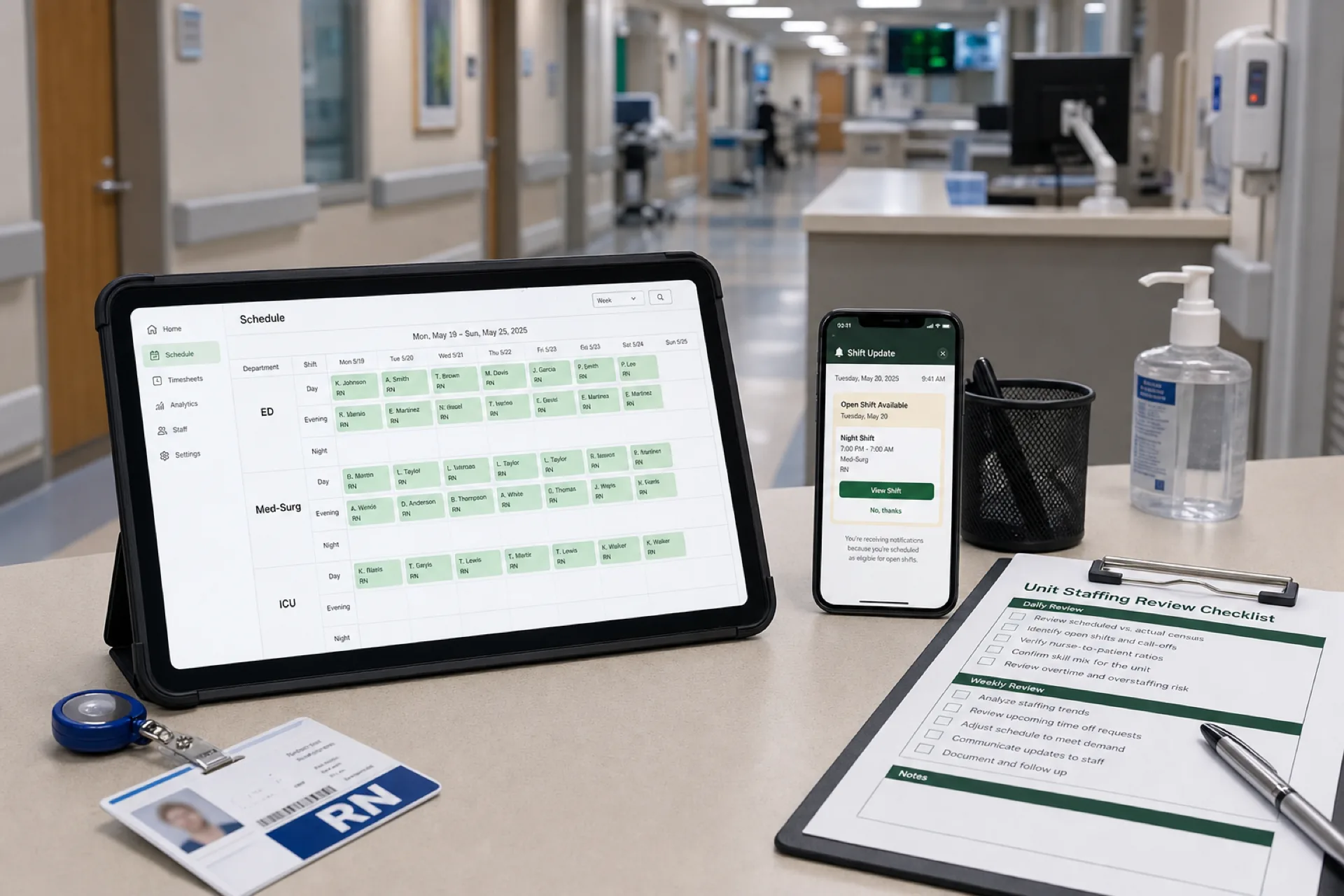
Hospital Staff Scheduling: Best Practices to Improve Coverage and Reduce Labor Costs (2026)
Learn hospital staff scheduling best practices to improve nurse coverage, reduce overtime, optimize workforce planning, and enhance patient care across inpatient, emergency, and surgical units with publish-first scheduling software.
Read article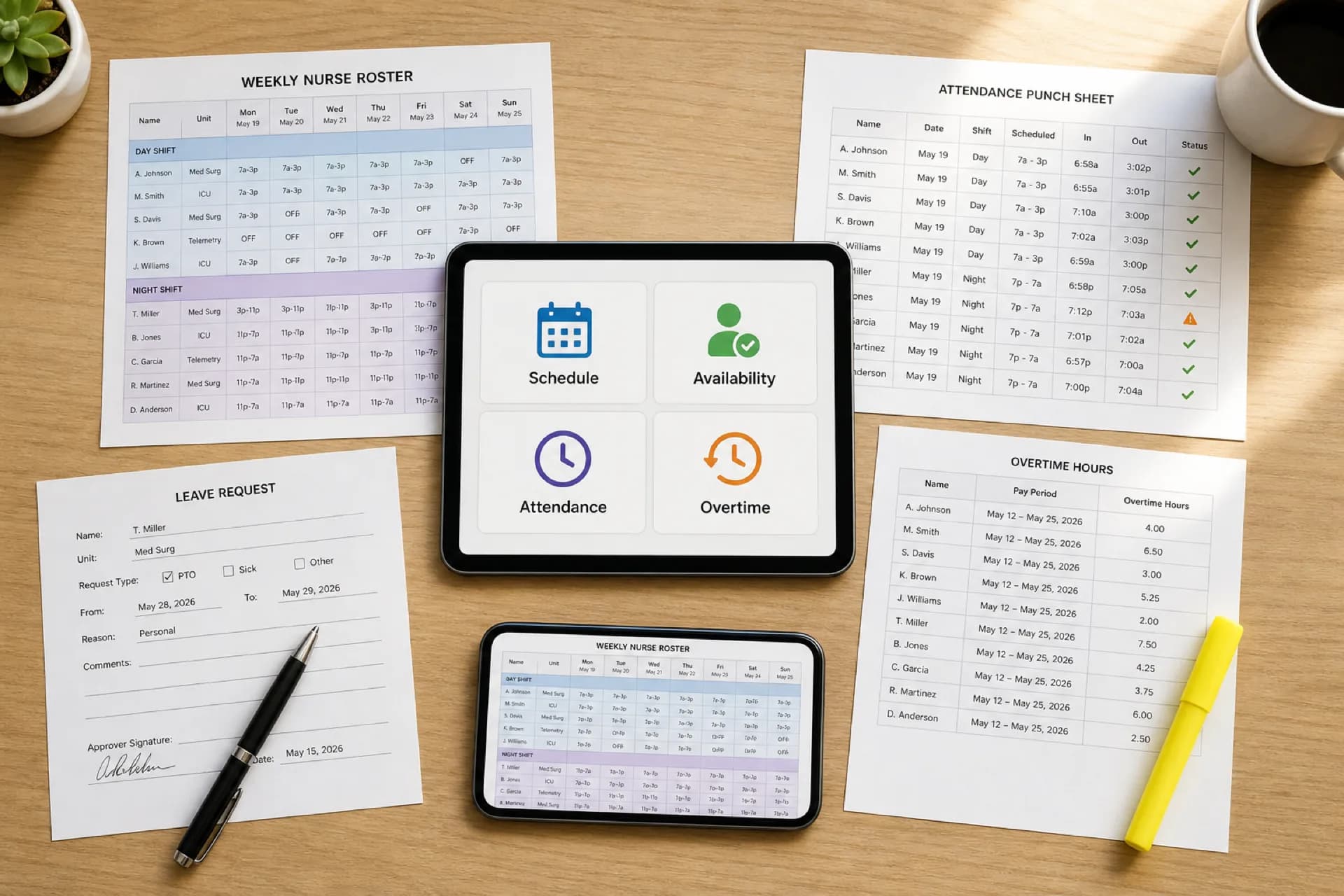
Healthcare Workforce Management Software: Complete Guide for 2026
Learn how healthcare workforce management software helps hospitals, clinics, and care organizations manage scheduling, availability, attendance, overtime, leave, and staffing from one platform.
Read article