


Healthcare Shift Swapping: Best Practices for Managing Employee Schedule Changes (2026)
Learn how healthcare organizations can manage employee shift swaps, approvals, coverage, availability, and scheduling changes while reducing administrative work.
Healthcare shift swapping: best practices for managing employee schedule changes (2026)
A nurse texts three coworkers about Saturday evening. One agrees in a group thread. The charge nurse updates a spreadsheet tab. Payroll exports Monday with the original assignment still on file. Handoff Sunday assumes the wrong name is on the band.
Healthcare schedules rarely stay unchanged. Employees may need to swap shifts because of personal commitments, unexpected situations, or changes in availability. At the same time, healthcare managers need to make sure every shift remains properly covered.
When shift swaps are handled through texts, phone calls, emails, or spreadsheets, managers can lose visibility into who is actually working. A structured healthcare shift swapping process can make schedule changes easier to manage while keeping managers in control.
Featured answer: What is healthcare shift swapping? Healthcare shift swapping is when one employee exchanges a scheduled shift with another qualified coworker through a structured request, acceptance, manager approval, and published roster update so coverage, hours, and attendance stay aligned.
Who should read this: Nurse managers, staffing coordinators, practice administrators, and operations leaders evaluating healthcare shift swap software or shift swap app for healthcare workflows before the next publish cycle.
Related reading:
- Healthcare staff scheduling software
- Healthcare open shift management
- Healthcare employee availability management
- Open shift and swap approvals
Executive summary
Healthcare shift swapping works when swap requests, manager approvals, hour review, and published roster updates happen on one system instead of across texts and spreadsheet tabs.
In this guide you will find:
- Why shift swapping matters in healthcare
- Common problems with manual swapping
- A seven-step healthcare shift swap workflow
- Best practices for manager approval and OT review
- Benefits, organization types, and a nurse swap example
- Software vs manual comparison and how to choose
- FAQ
Why shift swapping matters in healthcare
Hospital shift swapping and outpatient swap requests share one requirement: the official schedule must match who is actually responsible for each band.
Healthcare organizations operate across different shifts and often require continuous staffing. Employees may need to swap:
- Day shifts
- Evening shifts
- Overnight shifts
- Weekend shifts
- Holiday shifts
- Department assignments
Without a structured process, even a simple swap can create scheduling conflicts, inaccurate attendance records, or unexpected overtime. Pair swap discipline with healthcare staff attendance tracking so approved changes flow into punch comparison. Read healthcare overtime management when swaps push hour totals toward premium bands.
Nurse shift swapping is especially common because nursing teams run 24/7 bands with float pools, per diem staff, and rotation rules. Managers need swap visibility before handoff, not after payroll.
Common problems with manual shift swapping
Most swap chaos is process failure, not employee intent.
Text message requests
Managers may receive multiple individual requests through different communication channels with no single queue or status.
Lack of availability visibility
Employees may agree to swaps without managers having a complete view of availability, leave, or existing assignments.
Scheduling conflicts
An employee may accidentally accept a shift that overlaps with another assignment or a second site.
Overtime risk
A healthcare shift swap can push the replacement employee over planned working hours when nobody reviews hour totals before approval.
Outdated schedules
The published schedule may not reflect the latest change if the swap lived only in chat.
Poor recordkeeping
It becomes difficult to determine who approved a swap, when the schedule changed, and which version attendance should tie to.
Read open shift and swap approvals on the published roster for publish-first mechanics that apply in clinical settings.
How a healthcare shift swap process should work
A clear employee shift swapping healthcare workflow keeps managers in control while giving staff flexibility.
1. Employee requests a swap
The employee selects the shift they want to change in the scheduling system, not in a private text thread.
2. Eligible employees are identified
Available, qualified coworkers can be considered for the shift based on role, unit rules, and captured availability.
3. Replacement employee accepts
An eligible employee agrees to take the shift through the official request flow.
4. Manager reviews the request
The manager checks coverage, availability, existing assignments, and working hours before approving.
5. Swap is approved
The approved change updates the published schedule. Employee-to-employee agreement alone should not change the official roster.
6. Employees are notified
Affected employees receive the updated schedule on mobile or web.
7. Attendance reflects the change
The final published assignment can be compared with actual attendance during the live week and before payroll export.
Best practices for healthcare shift swapping
Keep manager approval
Employee-to-employee swaps should not automatically change the official schedule without appropriate oversight. Manager approval protects coverage, credential rules, and hour discipline.
Check employee availability
The replacement employee should be available for the requested shift. Outdated availability records cause swap conflicts. See people and availability.
Consider working hours
Managers should review whether the swap could create excessive working hours or overtime for either employee. Use the overtime risk calculator on draft approvals.
Keep a record of changes
Every approved swap should be reflected in the official schedule with approver and timestamp, not only in manager memory.
Make the process easy for employees
A simple mobile request workflow reduces unnecessary calls, texts, and charge nurse interruptions on the floor.
Keep everyone updated
Employees should see the current version of their schedule after approval. Parallel schedules in group chat create ghost shifts.
Align swaps with leave
Approved leave should block swap acceptance for absent employees. Read healthcare leave management best practices.
Connect swaps to attendance and overtime
An approved swap should update the assignment that healthcare staff attendance tracking compares against punches. If the replacement employee picks up extra hours, healthcare overtime management review should happen at approval time, not at payroll export.
Benefits of structured shift swapping
Reduce administrative work
Managers spend less time coordinating shift changes manually across texts, calls, and spreadsheet tabs.
Improve employee flexibility
Employees have a structured way to manage schedule conflicts without no-showing or leaving shifts uncovered.
Improve coverage
Managers maintain visibility into who is responsible for each shift after approval.
Reduce scheduling conflicts
A centralized process makes it easier to review availability and existing assignments before approve.
Improve overtime visibility
Managers can review working hours before approving changes instead of discovering premium labor at payroll.
Maintain accurate schedules
Approved swaps update the official workforce schedule that attendance and reporting should follow.
Healthcare shift swapping for different organizations
Healthcare employee scheduling swap rules differ by setting. Link specialty depth to each model.
Hospitals
Manage hospital shift swapping across departments and 24/7 bands. Float and per diem staff need hour visibility across units. Read hospital staff scheduling software and hospital staff scheduling best practices.
Nursing teams
Coordinate day, evening, overnight, weekend, and holiday nurse shift swapping with rotation fairness. See nurse scheduling software and nurse shift rotation best practices.
Urgent care centers
Handle changes across extended operating hours and volume-driven bands. Read urgent care scheduling software.
Home healthcare agencies
Coordinate caregiver and nurse assignment changes across territories and visit schedules. Field swaps need mobile workflow. See home healthcare scheduling software.
Medical clinics
Manage swaps across clinical and administrative employees tied to session hours. Read medical clinic scheduling software.
Dental practices
Coordinate changes among dentists, hygienists, assistants, and office staff. See dental practice scheduling software.
Physical therapy clinics
Track therapist and support staff swap requests across treatment blocks. Read physical therapy scheduling software.
Behavioral health organizations
Manage schedule changes across clinical and support teams and evening programs. See behavioral health scheduling software.
Example: a nurse needs to swap a shift
A nurse is scheduled for a Saturday evening shift but becomes unavailable due to a family commitment.
Instead of sending messages to several coworkers and asking the manager to manually update a spreadsheet:
- Employee submits swap request for the Saturday evening band in the scheduling app.
- Eligible coworker accepts the shift through the official flow.
- Manager reviews availability, existing schedules, working hours, potential overtime, and coverage requirements.
- Swap is approved and the published roster updates.
- Both nurses receive notification with the current schedule.
- Attendance ties to the approved assignment during the live week.
The manager can see that the replacement nurse is under weekly hour threshold, qualified for the unit, and not already assigned to an overlapping band. This creates a clearer process than informal coordination. It does not eliminate every schedule change, but it reduces ghost shifts and payroll mismatches.
Healthcare shift swapping software vs. manual processes
| Area | Structured software | Manual process |
|---|---|---|
| Swap requests | Centralized queue | Text, email, phone |
| Approval | Structured manager review | Verbal or memory |
| Availability | Visible before accept | Often separate file |
| Overtime review | Hour totals on approval screen | Manual calculation |
| Schedule updates | Centralized published roster | Spreadsheet edit |
| Notifications | Centralized to affected staff | Individual messages |
| Recordkeeping | Automatic audit trail | Manual notes |
| Multi-location | Centralized roll-up | Difficult across sites |
Compare best healthcare staff scheduling software when evaluating platforms with swap workflow built in.
How to choose healthcare shift swap software
Look for:
| Requirement | Why it matters |
|---|---|
| Employee shift swap requests | Structured intake, not texts |
| Manager approval | Coverage and credential control |
| Employee availability | Realistic accept before conflict |
| Open shift management | Uncovered bands filled on same roster |
| Working-hour visibility | Review totals before approve |
| Overtime visibility | Catch premium risk on swap |
| Attendance tracking | Approved swap ties to punches |
| Mobile access | Floor and field request speed |
| Multi-location scheduling | Float staff visible across sites |
| Schedule notifications | Staff see current published week |
| Workforce reporting | Swap volume and exception patterns |
Run a two-week pilot that includes one swap, one open shift fill, and one manager rejection. If the published roster matches what staff and payroll expect at period end, expand.
Why choose Heyshift?
Heyshift addresses healthcare shift swap software through scheduling integration and manager approval, not unsupported promises that every swap will always succeed.
Employee scheduling and shift swap requests
Build and publish schedules. Employees submit swap requests tied to specific shifts on the official roster. Explore shift scheduling.
Manager approvals and employee availability
Route swap requests through manager review with availability and hour context visible before approve.
Open shifts, leave, and attendance
Post uncovered bands to qualified staff. Show approved leave beside the grid. Compare attendance to the published assignment after swap approval.
Time tracking, overtime visibility, and reporting
Review working hours when approving swaps. See cost and labor insights and workforce visibility.
Multi-location workforce management and mobile access
Manage swaps across sites from one account. Nurses, caregivers, and support staff request and accept on mobile.
Review pricing. Start 30-day free trial. Software supports structured swap workflow; managers still own credential rules, union agreements, and coverage standards.
Final thoughts
Shift swapping is a normal part of healthcare workforce management.
The challenge is making sure schedule changes do not create coverage gaps, conflicts, inaccurate attendance records, or unexpected overtime.
A structured shift-swapping process gives employees flexibility while giving managers the visibility and control needed to maintain accurate schedules.
Make healthcare shift swapping easier with Heyshift: manage employee schedules, shift swaps, availability, open shifts, attendance, leave, and workforce operations from one platform.
Related Healthcare Resources
- Multi-Location Healthcare Workforce Management
- Healthcare Employee Availability Management
- Healthcare Open Shift Management
- Healthcare Staff Attendance Tracking
- Healthcare Overtime Management
- Open Shift and Swap Approvals
- Hospital Staff Scheduling Software
- Nurse Scheduling Software
- Healthcare Workforce Management Guide
- Healthcare Staff Scheduling Software
Frequently Asked Questions
Continue with related topics
More articles on topics related to this one.

Healthcare Scheduling Software for Startups: How Growing Healthcare Teams Can Manage Staff
Healthcare startups often start on spreadsheets. Learn when growing teams should move to scheduling software, which features matter first, and how to scale staffing without rebuilding the process every quarter.
Read article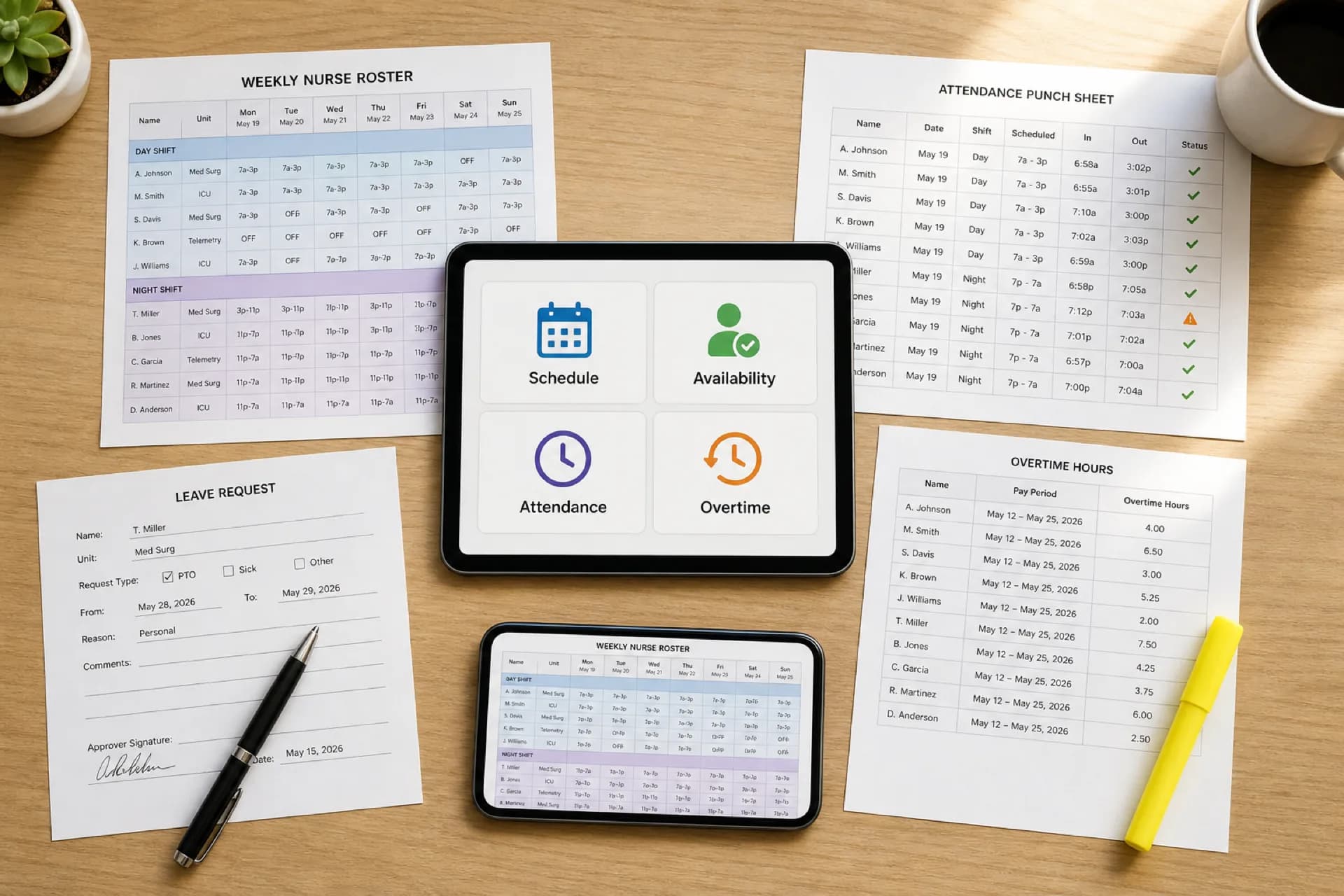
Healthcare Workforce Management Software: Complete Guide for 2026
Learn how healthcare workforce management software helps hospitals, clinics, and care organizations manage scheduling, availability, attendance, overtime, leave, and staffing from one platform.
Read article
Employee Scheduling KPIs: 12 Metrics Every Operations Manager Should Track
Twelve employee scheduling KPIs with formulas, review cadences, and first actions, plus the trade-offs between them that most KPI lists skip.
Read article